
A FREE GUIDE FOR CLINICIANS
The Brain Behind the Stuck Client
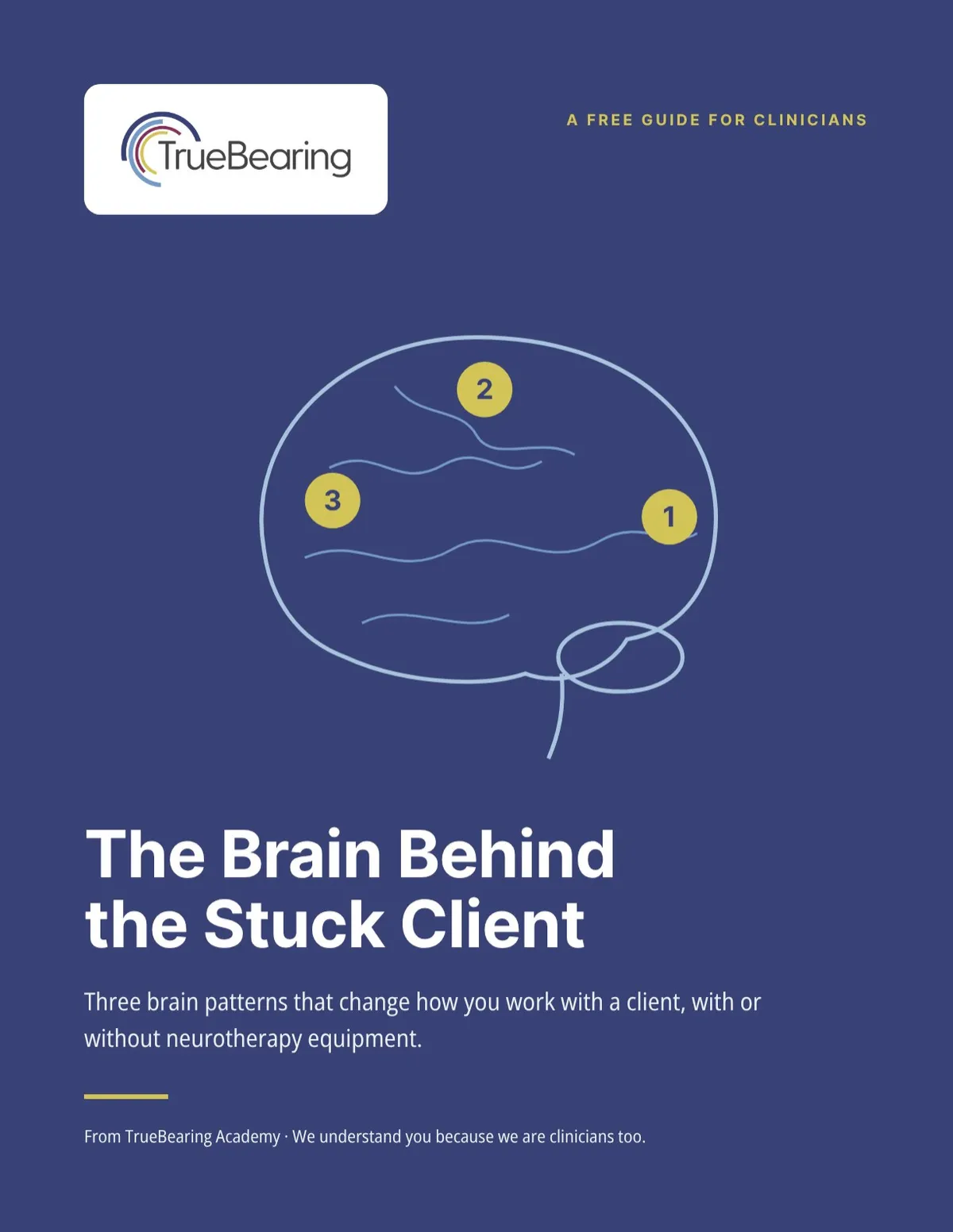
Three brain patterns that change how you work with a client, with or without neurotherapy equipment.
9 pages · includes a printable intake listening card
When the usual approach is not landing
Every clinician has them: the client who does the homework and still feels the same, or who drifts away just as the work gets real. It's easy to read that as resistance, or as a gap in our own skill.
Sometimes something else is going on. The nervous system the client brings into the room may be working against the session, and seeing that changes what you do next.
INSIDE THE GUIDE
Each pattern starts with a moment you'll recognize from session and ends with something you can try next week.
PATTERN 1

The alarm that won't switch off
"I'm just always anxious." Why some clients can't identify a trigger for their anxiety, and what calms the system from the bottom up.
PATTERN 2

Steady at rest, unraveling under demand
The client who checks out when the work gets hard, and why it may not be a matter of willpower.
PATTERN 3

"I just didn't know what it meant or what to do"
Where a client stalls in the emotional regulation sequence, and how to walk through it together.
Plus a printable intake listening card, and a clear picture of where neurotherapy fits alongside the therapy you already do.
Careful with the evidence
Every claim in the guide is marked as research-backed, emerging, or a teaching image, so you know exactly what you're reading.

Useful on Monday
Everything in the guide can be used before any equipment enters the room.
Written for clinicians at any stage
Early in your career and looking for a clearer map of what's happening with complex clients
Established and skilled, but stuck with some clients and ready for something new
Neuro-curious, or already using neurotherapy and wanting a sharper lens

ABOUT TRUEBEARING
We understand you because we are clinicians too.
TrueBearing Academy trains mental health professionals and coaches to integrate neurotherapy into the practices they already run. Every mentor and trainer is an actively practicing neurotherapist.
Our Founder and CEO, Dr. Nathan Brown, has over 45 years of experience in clinical psychology, neurotherapy, and organizational change.
Get the free guide
Free. Unsubscribe anytime. Privacy policy
Client stories are drawn from real cases, with details changed to protect privacy.
© 2026 TrueBearing Academy. All rights reserved.